
Photo-Etched Parts: Benefits, Applications and Design Considerations
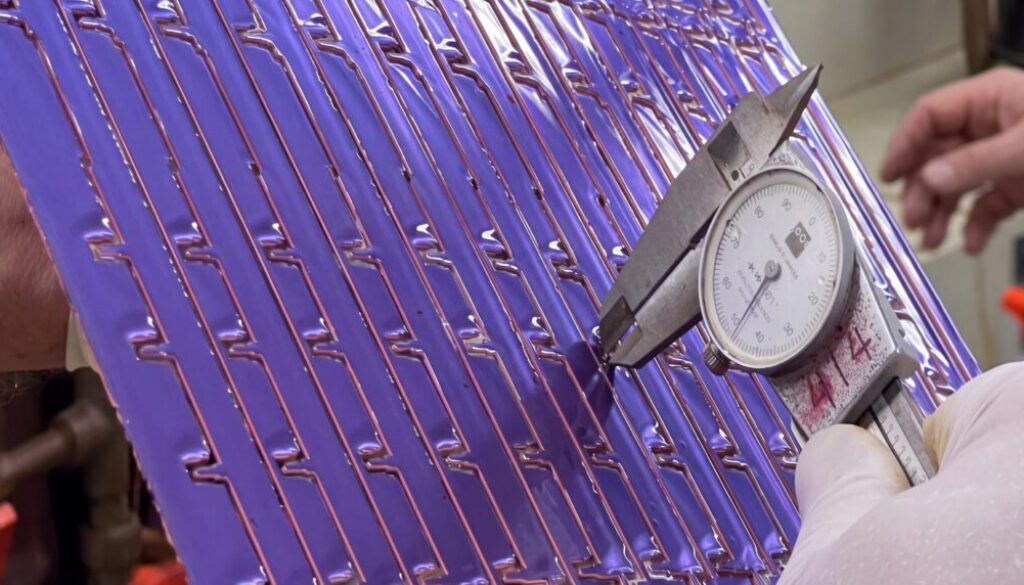
When engineers begin looking for a manufacturing process for a thin metal component, photo etched parts are worth considering early in the design process. Photochemical machining can produce intricate metal geometries without the mechanical force or heat associated with several conventional cutting methods. At ChemTecUSA, we use this process to manufacture components for aerospace, medical, electronics, energy and industrial applications, supporting projects from early design and prototyping through production.
What Are Photo-Etched Parts?
Photo etching, photochemical machining and chemical etching describe closely related manufacturing processes. A photoresist pattern is applied to a sheet of metal and exposed to create the required part image. A controlled chemical process then removes the exposed metal, leaving the desired geometry.
Unlike stamping, the process does not require a hard die to cut the part. Compared with laser cutting, it does not create a heat-affected zone. Conventional machining removes material with cutting tools and mechanical force, while chemical etching removes selected areas through a controlled chemical reaction.
The result can be a flat metal component with detailed openings, fine patterns and intricate shapes.
Benefits of Photo Etching
One of the main reasons engineers consider photo etching is edge quality. The process produces burr-free edges, which can eliminate the need for a separate deburring operation in suitable applications. Because there is no cutting tool pressure, the process also avoids the mechanical stress associated with some conventional methods.
Chemical etching does not introduce a heat-affected zone, which can be important when the original properties of the metal need to remain intact. The process can also produce fine features and intricate geometries across an entire sheet in a single operation.
Photo tooling can be changed more readily than hard tooling, which can make design revisions more practical during development. ChemTecUSA also supports prototyping and production, allowing a design to move through development without changing to an entirely different manufacturing method.
Common Applications for Photo-Etched Parts
Photo etched parts are used in many applications where thin metal, detailed geometry and clean edges are important. Examples include screens and filters, encoder discs, electrical contacts, lead frames, shims, spacers, medical-device components, bipolar plates, surgical blades, nameplates and identification products.
ChemTecUSA currently manufactures products such as surgical blades, encoder discs, screens and filters, electrical components, bipolar plates, and nameplates and ID tags.
Materials Used for Photo Etching
The appropriate material depends on the component’s function and manufacturing requirements. ChemTecUSA works with stainless steel, copper, brass, beryllium copper, nickel, Kovar, carbon steels and electronic and specialty alloys.
Material thickness also matters. Rather than assuming a particular alloy or gauge will work for every geometry, we review the material, thickness and part requirements together before production.
Design Considerations
Before submitting a drawing, engineers should consider the material type and thickness, minimum feature sizes, hole and slot dimensions, tolerance requirements and overall geometry. Bend or forming requirements should also be identified early, particularly when the finished component will not remain flat.
Surface finish, plating, printing and other finishing requirements can affect the design as well. Production quantity is another consideration because the economics of tooling and processing can change between prototypes, short runs and ongoing production.
At ChemTecUSA, our engineering team can review drawings and CAD files with manufacturability in mind. Our single source capabilities include etching, forming, plating, printing, assembly and other finishing operations under our team’s supervision.
When Is Photo Etching the Right Process?
Photo etching is worth considering when you need a thin, flat metal component with intricate patterns or detailed features. It can also be a good fit when a design may change during development or when the component cannot tolerate burrs, mechanical stress or thermal distortion.
ChemTecUSA is a U.S.-based, veteran-founded manufacturer with roots dating to 1976. We maintain an ISO 9001:2015-certified quality system and support projects from early engineering and prototyping through production.
If you have a drawing or CAD file, send it to our team for a manufacturability review and custom quote. We can discuss your material, geometry, quantity and finishing requirements and determine whether photo etching fits the application.